Email still works. That surprises some people, but numbers tell the story clearly. People check their inbox every day, sometimes many times a day. Messages land right where attention already exists. That alone makes email powerful for small businesses.
Another reason email stays strong is cost. Ads keep getting more expensive. Social reach keeps dropping. Email stays steady. Research from 2025 shows email marketing can bring back between $36 and $42 for every dollar spent. That return beats almost every other digital channel out there.
Here’s a simple question worth asking. Why spend more chasing new customers when you can talk to people who already know you?
This guide breaks down the best email marketing tools small businesses can actually use in 2026. No fluff. No confusing talk. Just real tools and when they make sense.
Why Email Marketing Still Matters for Small Businesses
Email usage keeps growing every year. In 2025, around 4.59 billion people were active email users worldwide. That number is expected to rise again in 2026.
Small businesses already know this. About sixty four percent of small businesses use email as part of their marketing. That number keeps climbing because email feels personal and direct.
Email marketing tools help small teams do things they could never manage manually. Things like sending welcome emails, reminders, updates, and offers without sitting all day clicking send.
Here’s why email works so well for small businesses:
- Emails reach people directly
- Costs stay low
- Results are easy to track
- Automation saves time
- Messages feel personal
Email campaign tools help turn casual visitors into repeat customers. That kind of relationship builds real growth.
What to Look for in Email Marketing Tools
Not every tool fits every business. Some are simple. Some go deep. The right choice depends on what you need today and what you plan for later.
Things that matter most:
Ease of use: A tool should feel comfortable fast. Small business owners rarely have time for long learning curves.
Fair pricing: Plans should grow along with your list, not jump suddenly in cost.
Automation: Automation handles welcome emails, follow ups, reminders, and basic customer journeys.
Connections: Good email marketing software connects easily to your site, store, or CRM.
Clear reports: Knowing what works helps you send better emails next time.
Email marketing platforms that cover these basics usually deliver the best long term value.
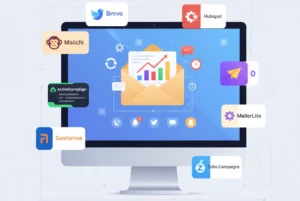
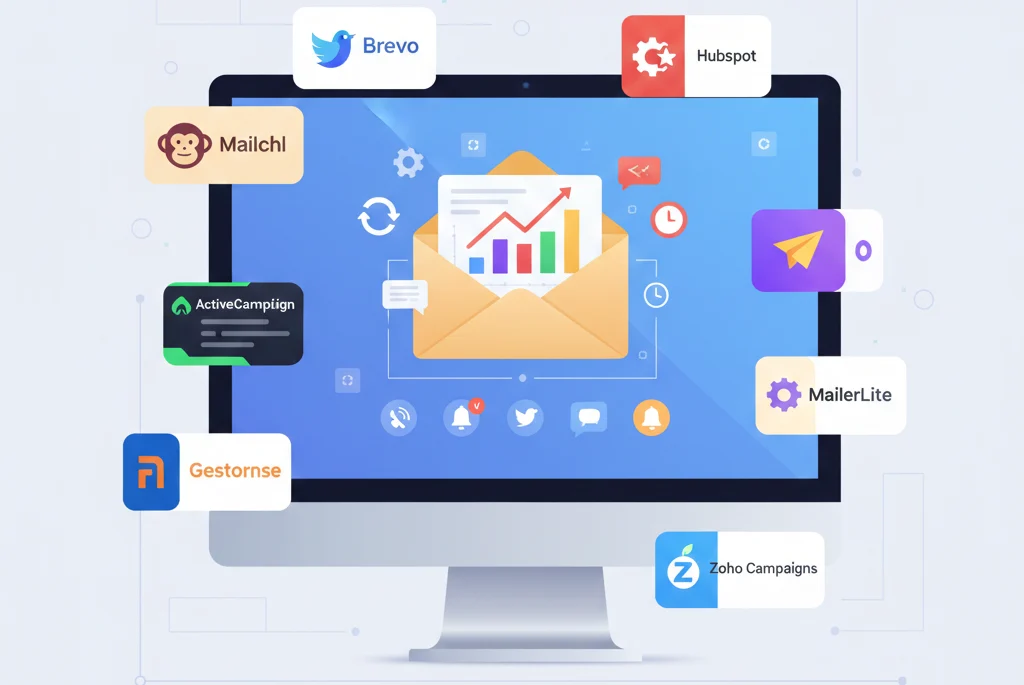
Quick Comparison of Email Marketing Tools
This table gives a quick view. The next section explains each tool properly.
| Tool | Best For | Ease | Automation | Budget | Good Fit |
| Mailchimp | Beginners | Easy | Basic | Friendly | Simple newsletters |
| Brevo | Budget automation | Easy | Strong | Great | Email and SMS |
| ActiveCampaign | Advanced flows | Medium | Strong | Fair | Sales focused |
| MailerLite | Content creators | Easy | Basic | Great | Clean newsletters |
| GetResponse | Online stores | Medium | Good | Fair | Funnels |
| HubSpot | CRM users | Easy | Strong | Flexible | Service businesses |
| Zoho Campaigns | Zoho users | Medium | Basic | Great | Zoho ecosystem |
1. Mailchimp
Mailchimp works well for beginners. Many small businesses start here because the interface feels familiar and friendly.
The email builder lets you drag blocks around easily. Templates help speed things up. You can send newsletters, updates, and offers without stress.
Automation exists too. Welcome emails, basic follow ups, and simple triggers are easy to set up.
Mailchimp works well as email marketing software when your needs stay simple and clear.
2. Brevo (Sendinblue)
Brevo gives strong value for money. Small businesses like it because pricing stays reasonable even as lists grow.
One big plus is email and SMS living inside the same tool. That means messages reach people in different ways without switching platforms.
Automation handles welcome messages, reminders, and follow ups smoothly. These email marketing tools feel powerful without being overwhelming.
Brevo fits businesses that want more control but still want things easy.
3. ActiveCampaign
ActiveCampaign suits businesses that want smarter automation. It shines when emails need to react to customer actions.
Emails can change based on clicks, visits, or purchases. This helps messages feel more personal.
Sales teams like ActiveCampaign because it includes a CRM. That makes tracking leads easier.
These email marketing platforms work best when growth and conversions matter more than simplicity.
4. MailerLite
MailerLite keeps things clean and simple. Bloggers, creators, and small brands love it.
Email design stays easy. The focus stays on content instead of complicated settings.
MailerLite includes forms and landing pages, which helps grow lists naturally.
This tool works well as email marketing software when content and consistency matter most.
5. GetResponse
GetResponse fits online sellers and businesses focused on conversions.
Sales funnels help guide people from interest to purchase. Cart recovery emails help bring lost buyers back.
Landing pages and forms come built in, which saves time.
These email campaign tools work best for ecommerce and product driven businesses.
6. HubSpot Email Marketing
HubSpot works well for service businesses and B2B teams.
Email connects directly to the CRM, which keeps customer details organized. Emails feel timely and relevant because they match where the customer sits in the journey.
Free plans help small teams start without pressure.
This email marketing platform fits businesses that care about long term customer relationships.
7. Zoho Campaigns
Zoho Campaigns fits businesses already using Zoho tools.
Customer data flows smoothly between apps. That helps with segmentation and targeting.
Automation stays simple but reliable.
This email marketing software works best when Zoho already runs your business systems.
Mistakes Small Businesses Often Make
Even strong email marketing tools fail when used poorly.
Common mistakes include:
- Sending emails too often
- Ignoring mobile design
- Never cleaning email lists
- Skipping analytics
- Sending the same message to everyone
Better results come from patience and testing. Emails improve when you learn from past sends.
How to Choose the Right Email Marketing Tools
Choose tools that fit your business today and still make sense tomorrow.
- Start by thinking about your goals.
- Do you want more sales? Better engagement? Stronger relationships?
- Budget matters too. Some email marketing tools look cheap at first but grow costly later.
- Test before committing. Free trials exist for a reason.
Final Thoughts
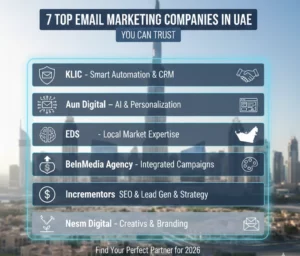
Email stays one of the smartest ways to grow a small business in 2026. The right email marketing company such as KLIC and tools help save time, build trust, and stay connected. Testing matters. Listening to your audience matters more.
What would happen if your emails felt less like marketing and more like a conversation? That answer often separates brands that grow from brands that fade.