You’ve got a beautiful Shopify store. Traffic is coming in. But the sales? They’re not matching the effort you put in. That’s the exact problem that Shopify conversion rate optimization can solve. This is because it turns the mind set from chasing more visitors to turning the ones you already have into paying customers.
The Shopify conversion rate is very much a relevant factor for Shopify stores that are working, no matter what their industry niche is. Filling the gap from intended to required CRO is not magic. It’s the result of small, deliberate changes that make a massive difference and the best part? You don’t need a huge budget or a big team to start seeing results.
Klic has written this guide for small business owners, solo entrepreneurs, and anyone learning digital marketing who wants to make their Shopify store actually work. No fluff just things that actually move the needle.
What Does Shopify Conversion Rate Optimization Mean?
Shopify conversion rate optimization (CRO) is the process of improving the percentage of visitors who complete a desired action. This desired action is defined by the Shopify store owner usually but for most it is usually making a purchase. It’s calculated as:
(Orders ÷ Total Visitors) × 100
Simple example: 1,000 visitors → 17 orders = 1.7% conversion rate.
The goal is to push that number higher by a plethora of strategies that make visitors complete that intended action. It can include removing friction, building trust and guiding people naturally towards the “Buy” button. Tools like Google Analytics show you where people are dropping off. Heatmaps show where they’re actually clicking and split testing tells you which version performs better.
Real experts like Peep Laja always say the same thing: start with understanding the customer and not with random changes. A conversion rate optimization agency can help you increase CRO as well as build authority and trust.
Benefits of Investing in Shopify Conversion Rate
Focusing on conversion rate optimization isn’t just about short-term sales spikes. It creates real business strength and here are the main benefits:
Increasing ROI:
Every dollar you spend on ads or content works harder when your store converts better.
Better User Experience:
Smoother navigation and faster load times help to clear messaging and make customers feel understood.
Data-Driven Insights:
Heatmaps, session recordings, analytics and other CRO tools help you map out how visitors move through your Shopify store. This will give you the real reasons people leave.
Competitive Edge:
Most stores look the same to the visitor so to get the edge you have to stand out. The ones that convert better stand out with something unique or a creative USP (Unique Selling Proposition).
Long-Term Growth:
Higher conversions compound over time and bring good news for your whole brand. This will mean more repeat buyers and a higher lifetime value.
The key conversion rate optimization benefits go much more in detail then the ones stated here because a well-maintained Shopify store provides much more benefits.
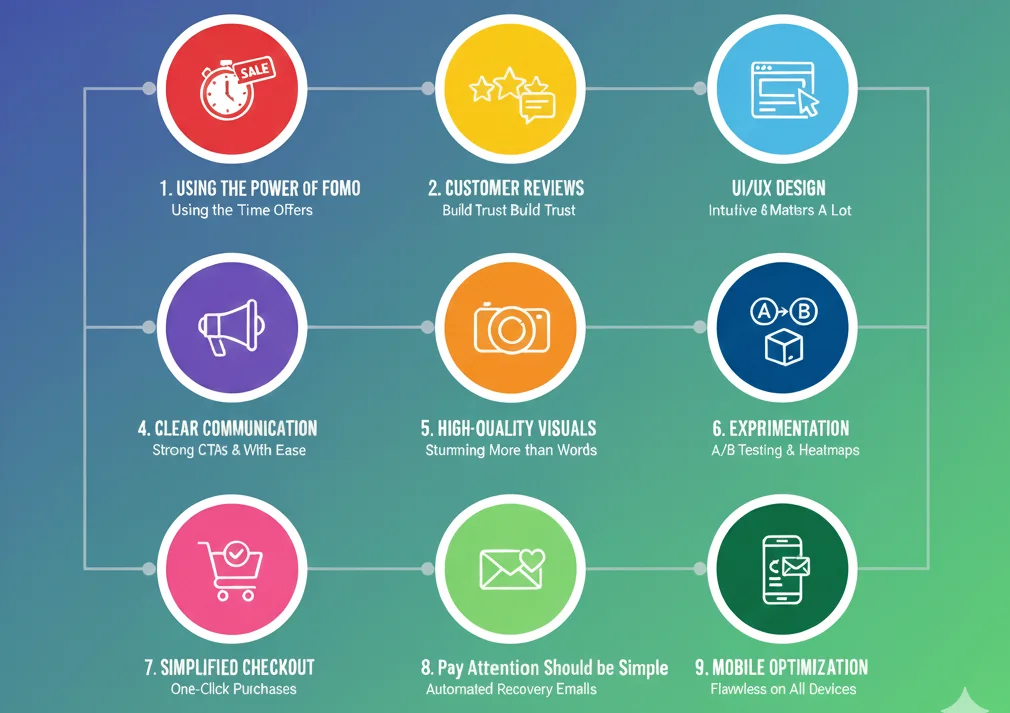
9 Ways to Boost Shopify CRO Activities
These are the exact tactics that have worked for hundreds of stores we’ve seen or worked on. The best CRO tactics and activities require deeper insight and forward thinking. Pick one or two that feel doable today and start there.
1. Using the Power of FOMO
Creating the fear of missing out among your customers will help to bring them in higher numbers and retain loyal customers. You can do so by using limited stock badges and countdown timers like “only 3 left” messages that create urgency without being pushy.
Cross-Selling Tactics:
Show “Frequently bought together” bundles on product pages — it’s one of the easiest ways to lift average order value.
Add Testimonials:
Place short but real customer quotes on the main page right under the product description.
2. Customer Reviews Build Trust
Reviews from your real and satisfied customers are the fastest way to convince hesitant shoppers. Any agency working with conversion rate optimization in Dubai will tell you that reviews matter.
EEAT Guidelines for SEO:
Google loves sites with authentic social proof — it helps your rankings and your conversions.
Website Authority:
The more genuine reviews you have, the more trustworthy your store looks.
3. UI/UX Matters A Lot
A clean and intuitive design keeps people moving forward. Your design shouldn’t confuse or overwhelm the visitor, instead it should make things clear for them.
Intelligent Searches:
Smart search bars that suggest products as you type reduce frustration.
Identifying User Search Intent
Make sure your product pages answer what people are actually looking for.
4. Communicating With Ease
Clear messaging removes confusion and your communication should be so effective that visitors know clearly what you mean. Clear messaging becomes easy when you know the difference between content marketing and PR.
Use Clear CTAs:
Big, contrasting buttons like “Buy Now – Free Shipping” work better than generic ones.
Compelling Product Descriptions:
Write benefits-first and then features that may be useful. Make sure to use short paragraphs and bullet points to get the main points across.
5. Visuals Speak More than Words
Words can help sell your products on Shopify but photos are the first thing visitors notice. So a bad photo can kill sales and a good one can keep bringing new customers.
High-Quality Product Images:
When taking product images make sure to think about multiple angles, zoom and lifestyle shots. These make people feel like they know the product.
Personalized Recommendations:
“Customers who bought this also bought…” is still one of the most powerful features.
6. Experimenting is Key
The first step in Shopify CRO is knowing and understanding that you are not the expert. Even when you contact Klic for CRO services, we still have to figure out how things work within your product industry and niche. Therefore, experimentation is key!
A/B Testing:
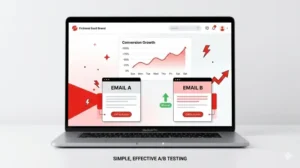
Test different headlines, colors for the home page and images for your products. These small changes can move the needle from 20% to 40%.
Heat Maps:
See exactly where people click and scroll. Hotjar and FullStory are still the best because they help you capture content marketing trends.
7. Checkout Process Should be Simple
Every extra click kills sales especially after the product has been put into the customer’s cart. After this step, all the other steps should be simple and seamless
Remember Customer’s Information:
Auto-fill addresses and save cards for returning customers.
Multiple Payment Options:
Offer Apple Pay, Google Pay and all the other local methods. You should have whatever your customers use.
8. Pay Attention to Abandoned Carts
This is a low-hanging fruit when Shopify conversion optimization rates are talked about. When a customer has included the product in their cart then maximum of the work is done. All you have to do now is push them towards purchase.
Send Emails to Visitors:
Automated recovery emails with product images convert the majority of abandoned carts.
Offer Discounts for Completed Orders:
A 10% off coupon in the email can bring back buyers who were almost there.
9. Technicalities Matter as Well
Your site must work perfectly on every device. Slow loading times or any other technical issues can make customers feel distrustful of the website.
Mobile Responsiveness:
Over 60% of Shopify traffic is mobile in 2025. This is why a bad mobile experience loses half your sales.
Website Loading Time:
Every extra second costs you 7% of conversions. This is a huge number for such a small part of your CRO practice. When you have designed your Shopify store to the buyer persona content then these smaller things shouldn’t matter.
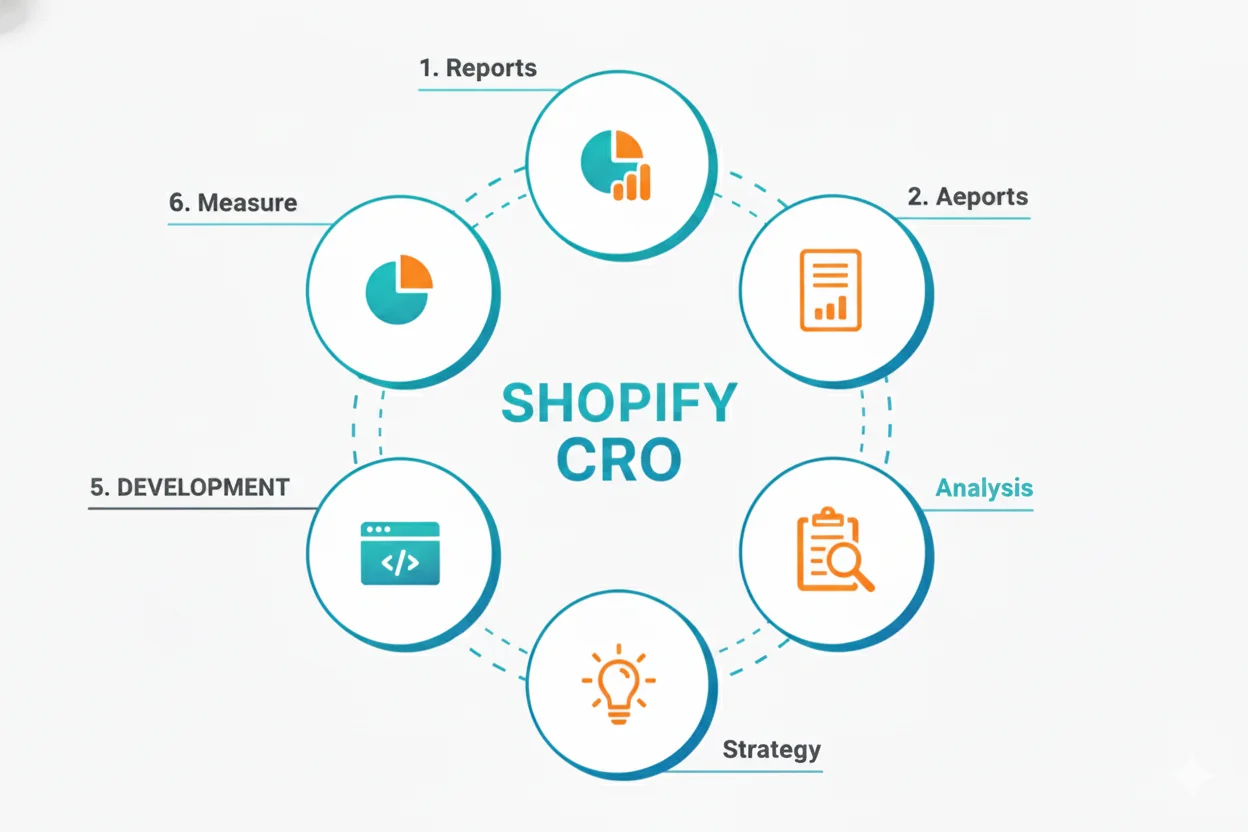
Understanding How CRO Works for Shopify
Content marketing plans are usually very detailed and follow a diligent process of making things work in your favor. However, the process of the CRO may be complex but CRO itself is pretty simple when designed to fit Shopify stores.
- Collect data: Use Google Analytics, heatmaps and other tools for session recordings
- Form a hypothesis: This means thinking about ‘If we simplify checkout, conversions will rise’.
- Testing: You will have 3 or 4 hypotheses about the Shopify store so the next step is to test with A/B tools like Optimizely or VWO.
- Drawing Results: Analyze results and roll out winners
Avinash Kaushik always reminds us: “Test everything, trust nothing.” That mindset alone can change your entire business. At Klic, our Dubai-based digital marketing agency helps Shopify stores with everything from PPC Marketing to content marketing with PR strategies. What makes us different? We offer a risk-free package — we only get paid a small percentage of the profit we help you generate. No upfront fees. If you’re serious about growing your store, talk to us.
Conclusion
Shopify conversion rate optimization isn’t complicated. It’s about understanding your customers, removing obstacles, and testing what actually works. Start with one thing today — maybe abandoned cart emails or better product photos — and watch your numbers climb. Your store already has the traffic. Now it’s time to make it pay.